Against stereotypes and misguided advice at the top
Insights from the Global Technology Forum– with Yejin Choi, Professor of Computer Science at Stanford University
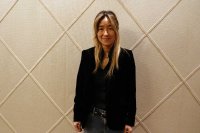
(PresseBox) - “Education for women is overrated,” “The field of artificial intelligence research is a dead end,” or “Topics such as common sense are a thing of the past” – these were supposedly well-intentioned pieces of advice that Yejin Choi heard during her career. Fortunately, she ignored them all. Today, she is Professor of Computer Science at Stanford University, has been named one of TIME 100's forward-innovating thinkers, and advises the United Nations on AI issues. Last year, her path also led her to the Global Technology Forum (GTF) at TUM Campus Heilbronn.
Wearing sunglasses and a leather jacket, the South Korean arrived for her interview at the ‘Inselhotel’ in Heilbronn on the evening before the GTF. She radiates the serenity of a woman who is exactly where she wants to be. To understand how she got there, it's worth taking a look back: “I went to the US at the age of 23 to work, not to study.” According to the stereotypes of the time, she was supposed to take on a different role: “I was told that grad schools are either unaffordable or beyond my reach.”
First steps at Microsoft
With only rudimentary English skills, she went to her interview at Microsoft and made a lasting impression: “I learned the basics of programming while studying Computer Engineering at Seoul National University. To get this software engineering job, I taught myself about software design.” This made the interview surprisingly easy for her, and she began her career in the United States in the field of systems and networks.
After completing her doctorate at Cornell University in New York State, she took her first position as an Assistant Professor at Stony Brook University on Long Island. She then moved to the University of Washington in Seattle, where she taught and conducted research for ten years. During this time, her research horizons broadened: “That's when I began to explore common sense, social and moral norms, among other things.” She flourished in Seattle until one day she received a call from Stanford University.
From Seattle to Silicon Valley
In late 2024, while taking a sabbatical year at NVIDIA, she moved to the world-famous Silicon Valley. “There's this spirit in the air there that's very intense, and I like intensity.” And change: “After the transition to the bay area, I feel like I'm discovering a whole new world,” she says. The research topic that she was advised against at the beginning of her career has developed extremely dynamically in recent years. AI is now on everyone's lips and is also being discussed by the general public.
She also contributed her expertise to the United Nations Security Council, where the topic of the meeting was ‘Maintenance of International Peace and Security.’ “I expressed the idea that you must have access to resources in order to achieve autonomy. It's a question of resources: where do investments – and therefore money – go?” At the moment, this is concentrated in a few regions. But even for the well-travelled researcher, appearing before such an audience was a completely new experience, which also brought some tension: “I was busy reading my script, so I didn't take notice to whether they were paying attention or what else they were doing,” she says and laughs.
Choi versus Goliath
When Choi looks back on her own publications, she is refreshingly honest: “None of them are perfect – they all have their weaknesses.” But: “There are things I really like because they were the first basic concepts for a larger whole.” Specifically, she is referring to her research on distillations from language models: Choi distilled the data from the GPT-2 version and then compared with her result against GPT-3. “It was amazing to compete against a model that was two orders of magnitude stronger at the specific task of summarizing a sentence – in the end, my group showed that we can construct high quality data even from such a weak model.”
The scientist does not lack the intellectual resources to demystify the AI giant, but rather the practical means: “Once I've raised a billion dollars, then I can start dreaming about it.” Choi is not fundamentally opposed to large language models (LLMs). Her vision is diverse: “I imagine a future in which there is a healthy ecosystem of different providers and industries. These can provide different types of language models or generative AI for different needs – similar to restaurants, taxi companies and other industries that many people depend on.”
Serving people
One of these industries is healthcare. She is therefore pleased that this topic was on the GTF agenda: “The use cases for AI are very important. That's why I found the keynote speech on ‘AI in medicine’ particularly exciting.” Ultimately, AI should be used positively and in the service of people. Her final appeal is therefore: “There are so many problems to worry about. However, I have realized that there is no point in just complaining. It is good to actually do something about it.” The same applies to supposedly well-intentioned advice and entrenched stereotypes.
Unternehmensinformation / Kurzprofil:


Datum: 26.02.2026 - 09:33 Uhr
Sprache: Deutsch
News-ID 733255
Anzahl Zeichen: 5442
contact information:
Contact person: Kerstin Besemer
Town:
Heilbronn
Phone: +49 (7131) 26418-501
Kategorie:
Chemical industry
Diese Pressemitteilung wurde bisher 522 mal aufgerufen.
Die Pressemitteilung mit dem Titel:
"Against stereotypes and misguided advice at the top"
steht unter der journalistisch-redaktionellen Verantwortung von
Die TUM Campus Heilbronn gGmbH (Nachricht senden)
Beachten Sie bitte die weiteren Informationen zum Haftungsauschluß (gemäß TMG - TeleMedianGesetz) und dem Datenschutz (gemäß der DSGVO).


