Hidden Inflammation Around Breast Implants
Even silent tissue reactions can shape long-term implant outcomes. Research results at Karl Landsteiner University have direct relevance for clinical practice.
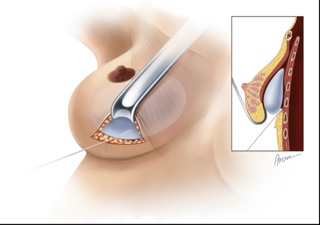 Copyright T. Flores
(firmenpresse) - Krems, Austria, 6 May 2026 – A new study suggests that breast implant complications are often not just mechanical events, but may be linked to slow biological changes in the surrounding (peri-implant) tissue over time. Researchers found that microbial contamination and peri-implant inflammation were associated with higher complication rates, particularly implant rupture. The prospective analysis covered well over 600 samples from 125 implant revisions in nearly 100 patients. Conducted by Karl Landsteiner University (KL Krems) the work helps explain more clearly why implants may fail. For KL Krems the findings underscore the need to look beyond visible damage and to consider low-grade inflammatory changes that may influence implant safety over the long term.
Breast implants are widely used both after breast cancer surgery and for cosmetic augmentation. Yet even when operations proceed according to established standards, complications such as capsular contracture (hardening of the scar tissue around the implant), rupture or pain may occur years later. It has been less clear, however, to what extent silent bacterial contamination and chronic tissue irritation contribute to these problems. Researchers at KL Krems therefore examined implant capsules and surrounding tissue in detail, combining microbiological analyses with microscopic tissue assessment.
More Than Wear and Tear
“We wanted to better understand whether complications are driven only by material fatigue and mechanical stress, or whether inflammation may be more important than previously thought,” says Dr. Celina Kerschbaumer BA BSc, lead author of the study from the Clinical Department of Plastic, Aesthetic and Reconstructive Surgery, University Hospital St. Poelten, a teaching and research site of KL Krems. CA Prof. Klaus Schrögendorfer, head of this department, also emphasizes the clinical relevance: “The study clearly shows that implants cannot be viewed solely from a technical perspective. Subtle, long-term inflammatory processes can have a decisive impact on durability and safety.”
The prospective study had examined a total of 631 samples from 125 implant revisions in 97 patients. The team found microbial contamination in 27 of the 125 revised implants, while 58 implants showed histological signs of inflammation. Implants with inflammatory signs had substantially higher complication rates than those without them. This was true in the overall cohort and in both patient groups studied (cancer surgery and cosmetic augmentation). In the full cohort, complications were seen in 65.5 percent of implants with inflammation, compared with 21.3 percent of implants without it. Implant rupture, in particular, was significantly more common when inflammation was present. The data also showed that contaminated implants more often displayed inflammatory tissue changes than non-contaminated implants.
The bacterial findings showed that gram-positive species dominated. The most common were Staphylococcus epidermidis and Staphylococcus lugdunensis, both bacteria typically found on the skin. Although not every bacterial trace leads to clinical problems, the findings support the view that even subtle contamination may help sustain inflammatory processes that weaken tissue and possibly also the implant over time.
Time Leaves Traces
The study also pointed to an important second factor: duration of implant inlay. Patients with cosmetic implants had significantly longer implant inlay times than breast cancer patients and also showed significantly more inflammation. This pattern suggests that prolonged implantation may itself promote chronic low-grade tissue reactions, even without detectable microbial contamination. Possible reasons include mechanical friction and the gradual release of tiny silicone particles as implant shells age.
“Implants are highly resilient, but they are not biologically neutral over unlimited periods,” says senior author Dr. Tonatiuh Flores, physician at the Clinical Department of Plastic, Aesthetic and Reconstructive Surgery. “The better we understand these slow processes, the better we can refine prevention, follow-up and surgical handling.”
Taken together, the findings show that breast implant complications need to be understood not only technically, but also biologically. It indicates that careful surgical hygiene, consistent follow-up and long-term awareness of inflammatory change may matter just as much as the technical properties of the implant itself. That KL Krems is contributing such work from the interface of plastic surgery, pathology and microbiology reflects its research focus on interdisciplinary questions of high relevance to healthcare.
Original publication: Microbial Contamination–Mediated Inflammation Is a Major Contributor of Breast Implant Complications: Prospective Analysis of 631 Samples, C. Kerschbaumer: K.D. Bergmeister: G. Bartellas: M. Weber: B. Ströbele: M. Kitzwögerer: K.F. Schrögendorfer: T. Flores, Journal of Clinical Medicine 2026, 15, 2115, doi: 10.3390/jcm15062115. https://kris.kl.ac.at/en/publications/microbial-contaminationmediated-inflammation-is-a-major-contribut/
More on KL Krems research: https://www.kl.ac.at/en/research/research-blog
Themen in dieser Pressemitteilung:
Unternehmensinformation / Kurzprofil:
Karl Landsteiner University (05/2026)
The Karl Landsteiner University (KL Krems) is an internationally recognized educational and research institution located on the Campus Krems. KL Krems offers modern, demand-oriented education and continuing education in medicine and psychology as well as a PhD programme in Mental Health and Neuroscience. The flexible educational programme is tailored to the needs of students, the requirements of the labour market and the challenges of science. The three university hospitals in Krems, St. Pölten and Tulln and the MedAustron Ion Therapy and Research Centre in Wiener Neustadt guarantee clinical teaching and research of the highest quality. In its research, KL Krems focuses on interdisciplinary fields with high relevance to health policy – including mental health and neuroscience, molecular oncology as well as the topic of water quality and the associated health aspects. KL Krems was founded in 2013 and accredited by the Austrian Agency for Quality Assurance and Accreditation (AQ Austria). https://www.kl.ac.at/en
Scientific Contact
Dr. Tonatiuh Flores
Clinical Division of Plastic, Aesthetic and Reconstructive Surgery
University Hospital St. Pölten
Karl Landsteiner University
Dunantplatz 1
3100 St. Pölten / Austria
T +43 2742/9004-13601
E tonatiuh.Flores(at)kl.ac.at
W https://www.kl.ac.at/
Copy Editing & Distribution
PR&D – Public Relations for Research & Education
Dr. Barbara Bauder-Jelitto
Kollersteig 68
3400 Klosterneuburg / Austria
M +43 664 1576 350
E bauder(at)prd.at
L https://www.linkedin.com/company/prd-public-relations-für-forschung-bildung
W https://www.prd.at


Datum: 06.05.2026 - 12:59 Uhr
Sprache: Deutsch
News-ID 736142
Anzahl Zeichen: 5570
contact information:
Contact person: Dr. Till C. Jelitto
Town:
Klosterneuburg, Austria
Kategorie:
Healthcare & Medical
Typ of Press Release: Success
type of sending: don't
Date of sending: 06.05.2026
Diese Pressemitteilung wurde bisher 216 mal aufgerufen.
Die Pressemitteilung mit dem Titel:
"Hidden Inflammation Around Breast Implants"
steht unter der journalistisch-redaktionellen Verantwortung von
PR&D – Public Relations ?for Research & Education (Nachricht senden)
Beachten Sie bitte die weiteren Informationen zum Haftungsauschluß (gemäß TMG - TeleMedianGesetz) und dem Datenschutz (gemäß der DSGVO).


